
Introduction to Juno's Mission
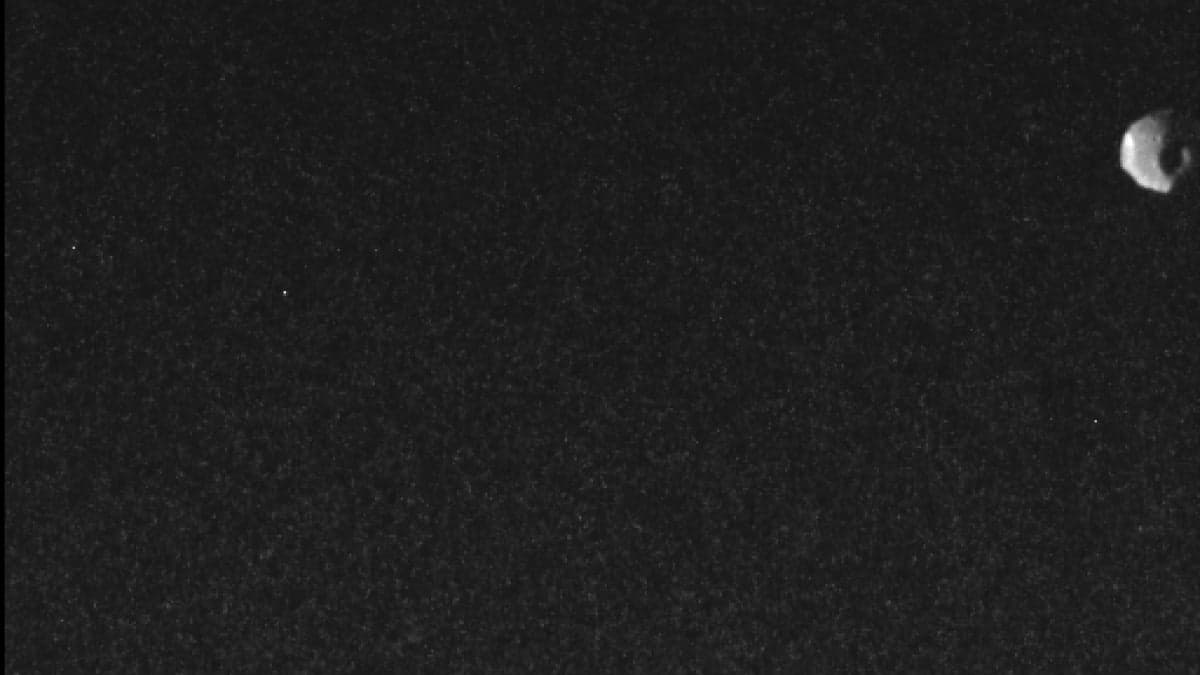
NASA's Juno spacecraft has been orbiting Jupiter since 2016, providing unprecedented insights into the gas giant's atmosphere, magnetic field, and moons. Last week, Juno caught sight of Thebe, one of Jupiter's 115 moons, and snapped a new portrait during its mission. Thebe is a small, irregularly shaped moon that orbits Jupiter at a distance of about 222,000 kilometers (138,000 miles).
Discovering Thebe
Thebe was discovered in 1979 by a team of astronomers using the Voyager 1 spacecraft. Since then, very little has been known about this moon, except for its size, shape, and orbital characteristics. The new portrait of Thebe captured by Juno provides a unique opportunity to study this moon in greater detail and learn more about its composition, geology, and potential habitability.
The Significance of Thebe
Thebe is a fascinating moon that offers insights into the formation and evolution of the Jupiter system. Its small size and irregular shape suggest that it may have formed from debris left over from the formation of Jupiter, or it may have been captured by Jupiter's gravity from outside the solar system. The study of Thebe and other small moons of Jupiter can provide clues about the early solar system and the processes that shaped the planets and their moons.
Exploring Jupiter's Moons
Jupiter's moons are a diverse group of objects that range in size from small, irregularly shaped moons like Thebe to large, icy worlds like Ganymede and Callisto. Each of Jupiter's moons has its own unique characteristics and offers insights into the formation and evolution of the Jupiter system. The study of Jupiter's moons is an active area of research, with scientists using a combination of spacecraft observations, laboratory experiments, and theoretical modeling to learn more about these fascinating worlds.
Juno's Mission and Findings
Juno's mission is to study Jupiter's atmosphere, magnetic field, and moons in unprecedented detail. The spacecraft has been orbiting Jupiter since 2016 and has made numerous groundbreaking discoveries, including the first-ever observations of Jupiter's polar regions, the discovery of a massive magnetic field, and the detection of powerful aurorae in the planet's atmosphere. Juno's findings have also provided new insights into Jupiter's interior, including the discovery of a massive, dense core at the planet's center.
Future Exploration of Jupiter's Moons
The study of Jupiter's moons is an exciting and rapidly evolving field, with many new missions and discoveries on the horizon. The European Space Agency's JUICE mission, scheduled to launch in 2022, will explore Jupiter's icy moons, including Ganymede, Callisto, and Europa. NASA's Europa Clipper mission, scheduled to launch in the mid-2020s, will study Europa in unprecedented detail, including its subsurface ocean and potential habitability. These and other future missions will provide new insights into the Jupiter system and its moons, and will help to advance our understanding of the solar system and its many mysteries.
Conclusion
NASA's Juno spacecraft has captured a stunning new portrait of Thebe, one of Jupiter's 115 moons, during its mission last week. The study of Thebe and other small moons of Jupiter can provide clues about the early solar system and the processes that shaped the planets and their moons. Juno's mission and findings have provided new insights into Jupiter's atmosphere, magnetic field, and moons, and have paved the way for future exploration of the Jupiter system. As scientists continue to study Jupiter's moons and the Jupiter system, they may uncover new and exciting discoveries that will help to advance our understanding of the solar system and its many mysteries.
- Juno's mission has provided new insights into Jupiter's atmosphere, magnetic field, and moons.
- The study of Thebe and other small moons of Jupiter can provide clues about the early solar system and the processes that shaped the planets and their moons.
- Future missions, including the European Space Agency's JUICE mission and NASA's Europa Clipper mission, will provide new insights into the Jupiter system and its moons.
- The exploration of Jupiter's moons is an exciting and rapidly evolving field, with many new discoveries on the horizon.
