
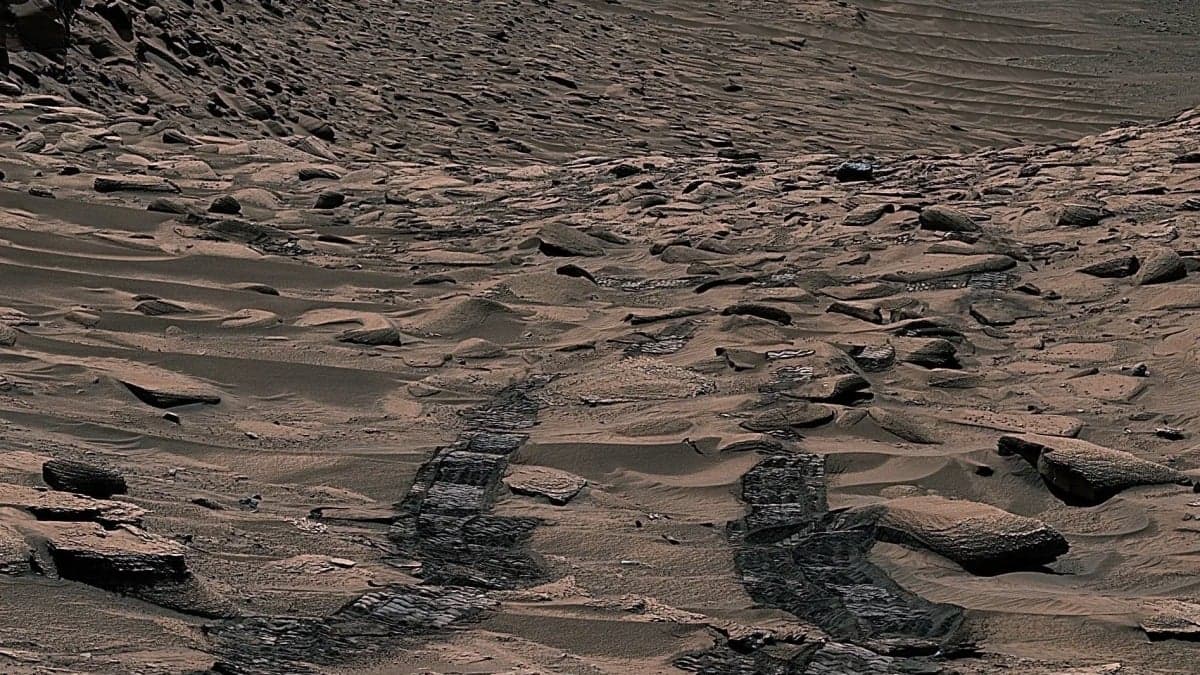
Introduction to the Mars Rover's Journey
NASA's Curiosity rover has been exploring Mars for six years, and a new timelapse video shows its journey, highlighting its discoveries and scientific purpose. The video, which was released by NASA, is a stunning montage of the rover's travels across the Martian surface, showcasing its movements and findings over the years.
The Video's Scientific Purpose
The timelapse video is not just a visually appealing montage, but it also serves a scientific purpose. By compressing six years of footage into a short video, scientists can analyze the rover's movement and identify patterns and trends that may not be immediately apparent from individual images. This can help researchers better understand the Martian geology and environment, and gain insights into the planet's history and evolution.
The Mars Rover's Discoveries
During its six-year journey, the Curiosity rover has made several significant discoveries, including the finding of water on Mars, the discovery of methane in the Martian atmosphere, and the identification of ancient lake beds and river systems. These findings have provided valuable insights into the Martian environment and have helped scientists to better understand the planet's history and potential for supporting life.
The Rover's Movement and Travels
The timelapse video shows the Curiosity rover moving across the Martian surface, traversing mountains, valleys, and craters. The video also highlights the rover's ability to navigate challenging terrain, including rocky outcrops, sand dunes, and steep slopes. The rover's movement is not just random, but is carefully planned and executed to ensure that it reaches its scientific objectives and gathers the necessary data.
The Importance of the Mars Rover Mission
The Mars rover mission is an important part of NASA's ongoing efforts to explore the Martian surface and understand the planet's environment and potential for supporting life. The mission has provided valuable insights into the Martian geology, atmosphere, and potential biosignatures, and has helped scientists to better understand the planet's history and evolution. The mission has also paved the way for future human missions to Mars, which are planned for the 2030s.
Future Plans and Objectives
NASA has plans to continue exploring Mars with future missions, including the Mars 2020 rover, which is scheduled to launch in July 2020. The new rover will be equipped with advanced instruments and technologies, including a sample collection system and a helicopter, which will enable it to gather more detailed and accurate data about the Martian surface and subsurface. The ultimate goal of these missions is to search for signs of life on Mars and to better understand the planet's potential for supporting human life.
Conclusion
In conclusion, the timelapse video of the Curiosity rover's journey on Mars is a stunning and informative montage that highlights the rover's discoveries and scientific purpose. The video provides valuable insights into the Martian environment and geology, and showcases the rover's ability to navigate challenging terrain and gather important data. As NASA continues to explore Mars with future missions, the Curiosity rover's journey will remain an important part of the agency's ongoing efforts to understand the red planet and search for signs of life beyond Earth.
- The Mars rover mission has provided valuable insights into the Martian geology and environment.
- The mission has helped scientists to better understand the planet's history and evolution.
- The rover's discoveries have paved the way for future human missions to Mars.
- The mission has shown the importance of continued exploration and research of the Martian surface and subsurface.
