
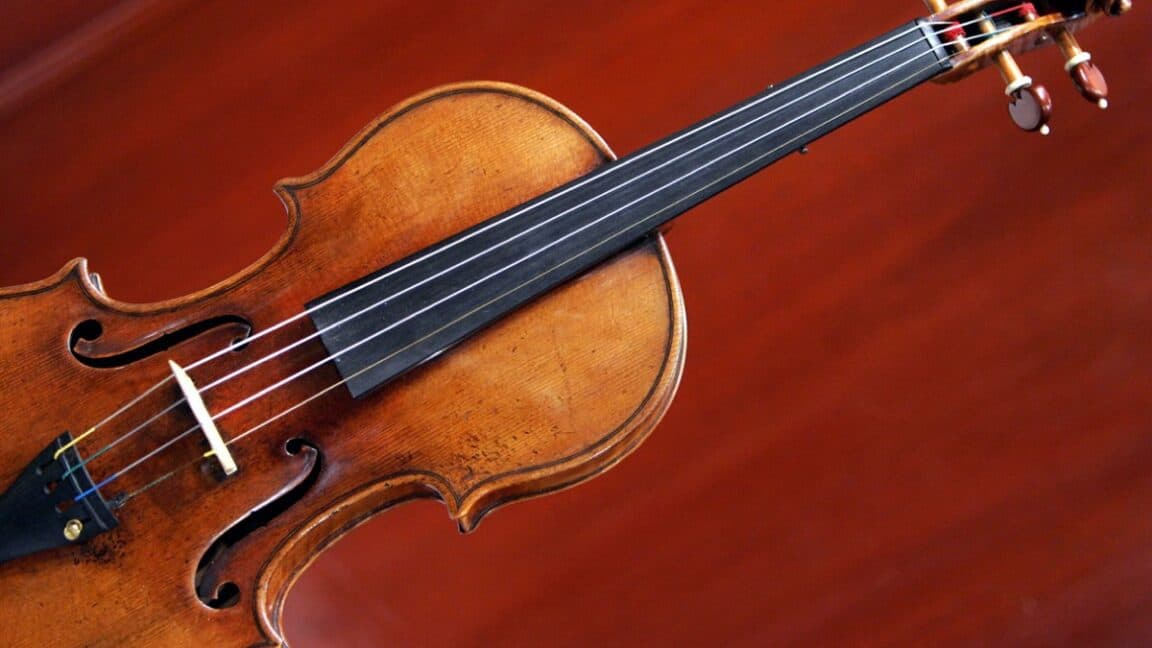
Introduction to MIT's Virtual Violin
Massachusetts Institute of Technology (MIT) has developed a revolutionary virtual violin that is set to change the way luthiers design and create musical instruments. The virtual violin is a computational model that allows users to tweak various parameters and hear the effect on the sound in real-time, streamlining the design process and paving the way for new sounds and possibilities.
How the Virtual Violin Works
The virtual violin uses advanced algorithms and simulations to model the behavior of a real violin, taking into account factors such as the shape and size of the instrument, the type of materials used, and the playing style of the musician. By adjusting these parameters, users can hear how the sound changes and make adjustments accordingly, allowing for a level of precision and control that is not possible with traditional instrument-making techniques.
The Benefits of the Virtual Violin
The virtual violin offers a number of benefits for luthiers and musicians alike. For one, it allows for a much faster and more efficient design process, as users can test and iterate on different designs without having to physically build and test each one. This can save time and money, and allow for a greater degree of experimentation and innovation. Additionally, the virtual violin can help to identify potential problems or issues with a design before it is even built, reducing the risk of costly mistakes and rework.
Applications of the Virtual Violin
The virtual violin has a wide range of potential applications, from music education and performance to instrument-making and research. For example, music students can use the virtual violin to practice and learn without the need for a physical instrument, while professional musicians can use it to test and refine their playing technique. Luthiers can use the virtual violin to design and create new and innovative instruments, while researchers can use it to study the physics and acoustics of sound production.
The Future of Instrument Design
The virtual violin is just the beginning of a new era in instrument design and creation. As technology continues to advance and improve, we can expect to see even more sophisticated and powerful tools for designing and creating musical instruments. This could include the use of artificial intelligence and machine learning to optimize instrument design, or the development of new materials and technologies that can be used to create instruments with unique and innovative properties.
Challenges and Limitations
While the virtual violin is a powerful tool, it is not without its challenges and limitations. For one, it requires a high degree of technical expertise and knowledge to use effectively, which can be a barrier for some users. Additionally, the virtual violin is not a replacement for the real thing, and there is no substitute for the experience and intuition of a skilled luthier or musician. However, as the technology continues to evolve and improve, we can expect to see these limitations addressed and overcome.
Conclusion
In conclusion, MIT's virtual violin is a groundbreaking tool that is set to revolutionize the way we design and create musical instruments. With its advanced computational model and real-time feedback, it offers a level of precision and control that is not possible with traditional instrument-making techniques. As the technology continues to advance and improve, we can expect to see even more innovative and exciting developments in the world of music and instrument design, and the virtual violin is just the beginning.
- The virtual violin is a computational model that allows users to tweak parameters and hear the effect on sound in real-time.
- The virtual violin offers a number of benefits for luthiers and musicians, including a faster and more efficient design process and the ability to identify potential problems or issues with a design.
- The virtual violin has a wide range of potential applications, from music education and performance to instrument-making and research.
- The virtual violin is just the beginning of a new era in instrument design and creation, with even more sophisticated and powerful tools on the horizon.
